Hetty Blades
Over the past few months, we have been working on the practitioner resource arising from our observations and findings. The aim of this resource is to provide dance and human rights practitioners with a means to experiment with drawing connections between dance and human rights, and help them to plan effective workshops. For the past ten days we have been back in Sri Lanka, sharing the draft with members of the VisAbility team and some of their workshop participants.
The first draft of the resource includes two sets of cards: one set features eight dance-related concepts, such as ‘self-expression’ and ‘group work,’ and the other set involves four legal empowerment-related skills, such as ‘self-confidence’ and ‘collective action’. These concepts and the links between them came directly from our observations during fieldwork. While we had in mind a few ways that the cards might be used, we were particularly interested to see how VisAbility and the participants might use these in their workshop planning.
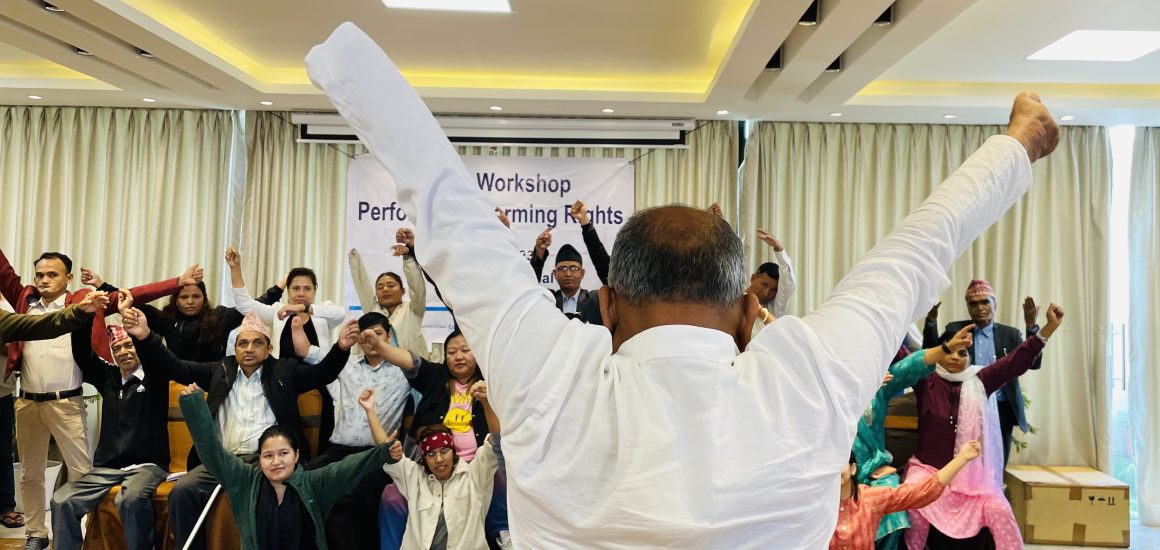
In Jaffna, we worked with five participants, all of whom had been involved in VisAbility’s workshops since the start of the project, and therefore have experience of working with dance concepts and rights principles. Rashmi (from VisAbility) and Hetty introduced the toolkit, showing how it might be used to identify dance concepts that can help develop the skills needed to address discriminatory scenarios that the participants face in their daily lives. Working in small groups, the participants then experimented with how they might use it to develop their own workshops.
In Batticaloa, we handed the reigns over completely to Helena and Mahesh (from VisAbility), who used the cards in a slightly different way. Rather than working with specific scenarios, they introduced a third set of cards which referred to social barriers, such as ‘exclusion’. They then used them to explain how they had come up with particular exercises, showing participants how they work with the connections between barriers, the skills needed to overcome them, and the capabilities developed through dance. The participants then used the cards to plan their own exercises, mapping the connections between each area.
At the end of each workshop we held a group discussion to reflect on how they found working with the resource, whether they might find it useful when working within their communities, any criticisms and how it could be improved.
Below are a summary of the key findings from the workshops:
-Making links between dance and rights easier when framed through a social barrier/problem from the daily lives of the workshop participants.
-Another set of cards with guidance about preparing for workshops, context, considerations etc. would be useful.
-Blank cards could be used to allow participants to articulate their own barriers, skills and movements.
-The resource has the potential to be used for prepping workshops and within workshops, to help participants think about the links.
-Some of the participants were enthusiastic about the potentials of the resource for them to do this work in their own communities.
-Helena, Mahesh and Rashmi felt that it could be helpful in their workshop planning and their training of trainers. They had helpful suggestions about concepts and exercises that we hadn’t included, such as power, and individuals ‘conducting’ the rest of the group in order to control which movement they all performed. They also suggested using arrows and +/- signs as a way of visually demonstrating the links.
Next steps
Next week, Lars and Mahesh will run another workshop session in Wattala, this time introducing the resource to a group of dance practitioners, who have limited or no experience of working with rights. They will give feedback on the potential usefulness of the resource and its usability for people unfamiliar with the area. Lars will also meet individually with several disability rights practitioners in Colombo, who have not done work with dance before, to gather their suggestions on the resource – and whether they can see themselves using it in rights-awareness trainings.
Responding to the feedback from the Batticaloa and Jaffna workshops, we will generate a set of cards that describe social barriers, include blank cards so that people can add their own barriers/exercises/skills and a comprehensive user guide. This second draft will be shared at our workshop in London on 3rd September where we will welcome further feedback before we publish the final version.
 Performing/Informing Rights