
Lars Waldorf
Dance is a foreign discipline and they sure do things differently there. I was at my first Dance Studies Association conference in early July, watching the opening addresses when the conference organizer got muzzled mid-sentence by three eminent dance scholars, who then staged a “provocation” to challenge academic norms. I was clearly not at the Society of Legal Scholars anymore.
The theme of this year’s conference was “Dance and Conflict” and several presentations looked at the role of dance during and after war. I also picked up a copy of Gay Morris and Jens Richard Giersdorf’s edited collection, Choreographies of 21st Century Wars (OUP 2016). It contains a valuable chapter by Janet O’Shea on how bharata natyam’s functions changed over the course of Sri Lanka’s civil war – “from radical to apolitical to conciliatory” (114).
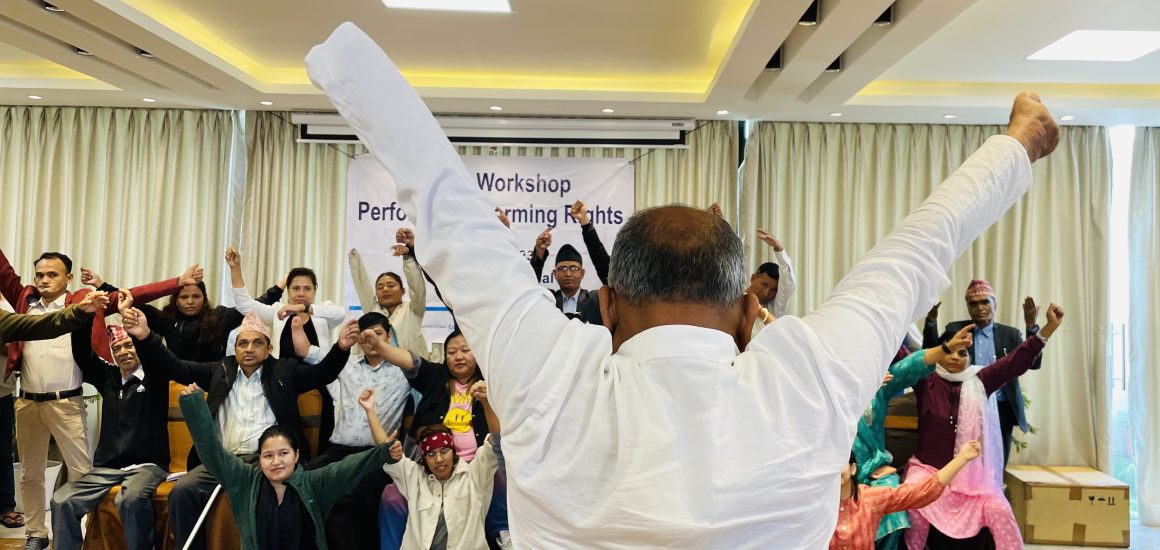
Hetty and I were on a panel on “dance, disability, and human rights” with two of her colleagues from Coventry’s Centre for Dance Research. Charlotte Waelde (another legal scholar) spoke about dance, rights, and intangible cultural heritage. Kate Marsh talked about how the “Traces of War” project created “spaces of connection and empowerment.” When it was our turn, I confessed up-front that I was a legal scholar trying to pass as a dance scholar. I framed our analysis within Martha Nussbaum’s capabilities approach and then left it to Hetty, the authentic dance scholar, to discuss our preliminary findings (you can download our PowerPoint slides here: performing-empowerment_july-2018). We got several good questions but the toughest came from Sara Houston who asked us about the link between the workshop participants’ increased range of movements and their increased assertiveness about rights. We acknowledged that we have been struggling to explain this. We head back to Sri Lanka in August to do more follow-up interviews with participants and that will certainly be a focus of our conversations with them.
 Performing/Informing Rights