Lars Waldorf
A big issue for any project promising empowerment is sustainability. The first aspect of sustainability is whether increased self-confidence and self-efficacy in the workshops and performances carries over into everyday life. We won’t be able to assess this properly until we come back in December and January, but our initial, follow-up interviews paint a mixed picture. On the one hand, many participants say they now intend to apply for government benefits that they didn’t know existed before. (Of course, the real test will be how persistent they are as they encounter bureaucratic indifference or discouragement.) On the other hand, we did an interview with a disabled workshop participant whose mother and sister kept speaking for her – so much so that my interpreter lectured the participant that “you need to speak for yourself now that you have been empowered.” That didn’t have the desired effect (and it later prompted something of a lecture from me on the need to keep research and advocacy more separated).
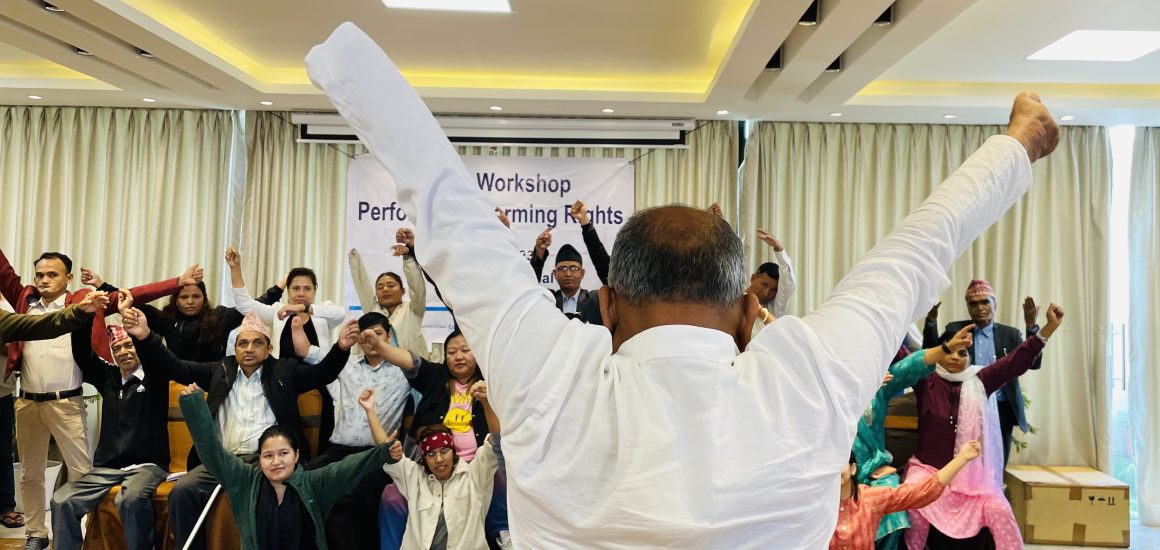
The second, more obvious aspect of sustainability is how to continue these dance and rights workshops once VisAbility’s members go back to their homes in Colombo and Cologne. As an audience member told us after the public performance in Jaffna’s Old Park, it is not good to do this just one time. In fact, VisAbility is already trying to make its work more sustainable. It got some funding from the German government to do follow-up training in mixed-abled dance and rights awareness with selected participants from the initial workshops. Last week, I watched VisAbility do four days of training with 10 participants in Batticaloa – five people with disabilities who, it is hoped, could train others in their communities plus two teachers and three students from the Swami Vipulananda Institute for Aesthetic Studies. At the end of the training, the participants gave a rousing, outdoor performance to assembled staff and students from the Institute. The choreography had been co-created, with movements built from shared personal stories.
After the performance ended, the Institute’s Director, Dr. Jeyasankar, invited the participants to talk about their experiences of the performance in front of the audience. Many of the disabled participants spoke movingly about how they had never expected to perform publicly – let alone in front of a university audience. In a follow-on meeting, Dr. Jeyasankar talked with VisAbility and the participants about the possibility of mainstreaming mixed-abled dance into the Institute’s curriculum, as well as hosting monthly dance workshops for the participants. If these things happen, then VisAbility’s project will have left an important legacy for education and inclusion in this country.
 Performing/Informing Rights