
Lars Waldorf (Batticaloa)
During the Q&A session after our disability rights panel, several audience members and panelists complained about government inaction. One disability advocate said he had “called the Minister to do something but nothing has happened.” Another said “the government has not fulfilled any of their promises but at least they have signed the [disability rights] treaty.” Sadly, it seems to be a government of equal opportunity when it comes to unrealized promises – as International Crisis Group describes in its dispiriting, new report: “Sri Lanka’s Transition to Nowhere.”
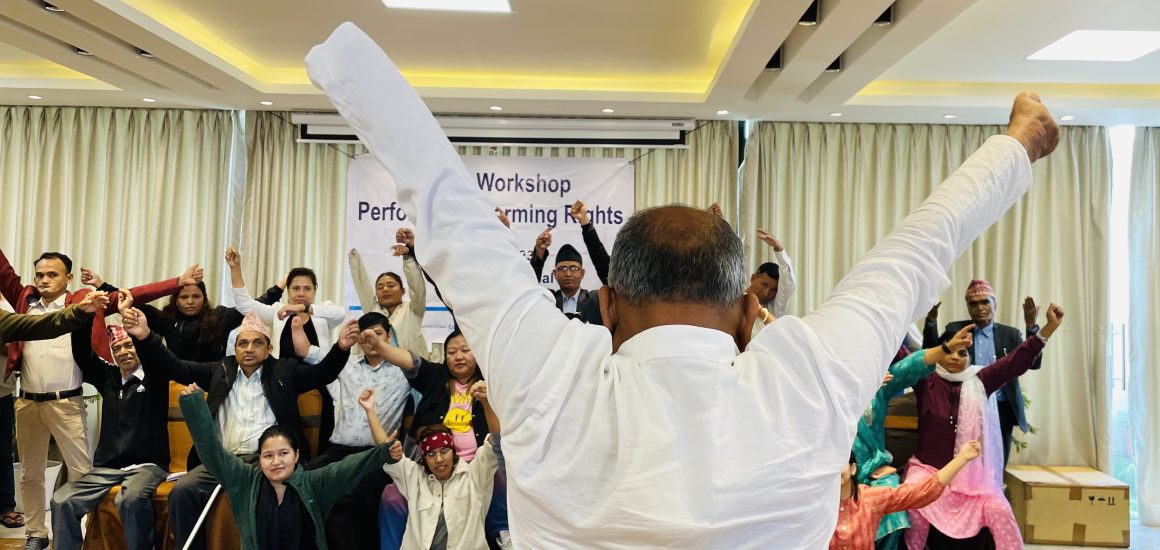
A reporter at our panel also questioned whether disability advocacy is having any effect. One advocate then responded: “When people with disabilities make claims, it makes a big difference.” Indeed, people with disabilities and their advocates have been claiming more loudly and more insistently since Sri Lanka ratified the UN Convention on the Rights of Persons with Disabilities (CRPD) in 2016.
One example is a new coalition calling itself the “February 8 Movement” after the date of CRPD ratification. That coalition is pushing for an independent Disability Rights Commission and a high-level government coordination mechanism to replace the National Council for Persons with Disabilities that it views as largely captured by the Ministry of Social Empowerment and Welfare. The coalition argues that the National Council and Ministry will be ineffectual when it comes to protecting and promoting disability rights given their adherence to a charitable approach to disability.
Another example is how disability advocates successfully lobbied the Public Representations Committee on Constitutional Reforms to recommend the full inclusion of disability rights (including socio-economic rights and affirmative action) into any new constitution. The Public Representations Committee’s final report also highlighted the importance of access to justice for people with disabilities – a key component for their legal empowerment. Unfortunately, the prospects for meaningful constitutional reform are increasingly bleak.
Given the domestic deadlocks, Sri Lankan disability advocates are increasingly taking their fight to the UN in Geneva. The International Centre on Ethnic Studies (which, despite its name, is doing important research on disability) submitted a shadow report to the UN Committee on the Elimination of Discrimination against Women in January. The Disability Organizations Joint Front submitted a shadow report to the UN Committee on Economic, Social and Cultural Rights in April. Still, international advocacy is hampered by the government’s refusal to ratify the CRPD’s Optional Protocol that allows the CRPD Committee in Geneva to hear complaints against Sri Lanka.
Of course, the big issue is whether treaty ratification, domestic lobbying, and international advocacy are making any real difference to the lives of ordinary Sri Lankans with disabilities. That remains to be seen. But I couldn’t help noticing that some of the train seats formerly reserved for clergy are now reserved for people with disabilities. That may not be much but it is perhaps the start of something.
![IMG_3455[1]](https://performinginforming.uk/wp-content/uploads/2017/06/img_34551.png?w=760)
 Performing/Informing Rights